

The main difference between indoor and outdoor ceiling fans is construction. Outdoor fans use sealed motors, corrosion-resistant materials, and weather-rated components to survive moisture, heat swings, and direct exposure. Indoor fans prioritize quiet operation and decorative design for dry, climate-controlled spaces. Getting this wrong is not just a performance issue. Installing the wrong fan creates fire hazards, rust, and early motor failure. The UL rating system (dry, damp, wet) is the industry standard for classifying ceiling fans by environmental suitability. Understanding these indoor outdoor ceiling fan differences before you buy protects your investment and your home.
1. What makes outdoor ceiling fans different from indoor fans
Outdoor ceiling fans are built around one core requirement: surviving conditions that would destroy a standard fan within months. The materials, motor design, and finish all reflect that priority.
The most visible difference is the blade material. Outdoor fans use ABS plastic, treated teak, aluminum, or marine-grade composites. These resist warping, swelling, and mold in humid air. Indoor fan blades are typically MDF, untreated wood, or lightweight composites that absorb moisture and degrade quickly when exposed to weather.
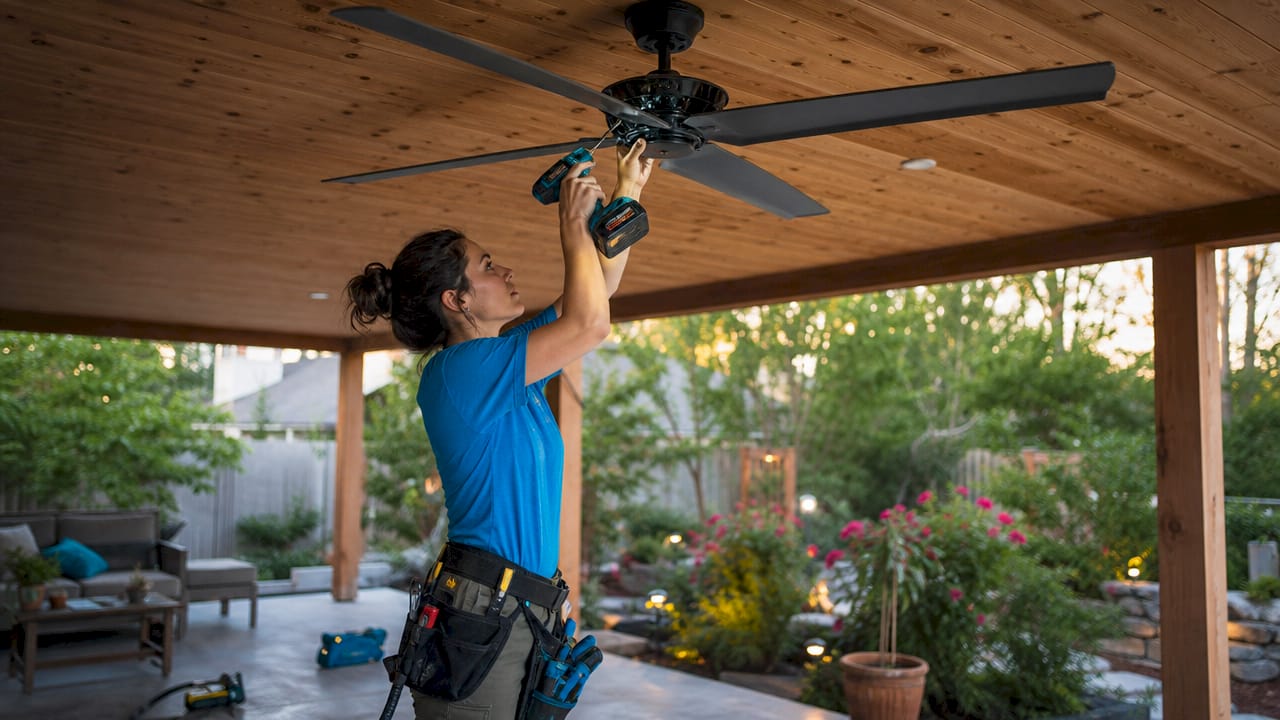
Motor sealing is the other critical factor. Outdoor fans use fully enclosed or sealed motor housings that block moisture, insects, and debris. Outdoor-rated fans last two to three times longer than indoor fans when exposed to similar environmental stressors. That gap in longevity comes directly from motor protection.
The UL location rating system defines three categories:
-
Dry-rated: Indoor use only, no moisture exposure
-
Damp-rated: Covered outdoor areas like screened porches or covered patios where moisture is present but direct rain contact is minimal
-
Wet-rated: Full outdoor exposure including open decks, pergolas, and areas subject to direct rain
Pro Tip: Check the UL rating label on the fan box before purchasing. A damp-rated fan on an open patio will fail prematurely. Match the rating to the actual exposure level of your space.
Outdoor fans also use stainless steel hardware and rust-resistant finishes on motor housings. Electrical components including capacitors in AC motors and PCBs in DC motors require UL damp or wet ratings to avoid premature failure in moist environments.
2. How indoor fans are built for style and quiet performance
Indoor ceiling fans are optimized for two things: aesthetics and quiet operation. They are not built to handle humidity, temperature extremes, or outdoor air volume.
The blade designs on indoor fans reflect interior decor priorities. You will find wood grain finishes, brushed nickel accents, fabric-wrapped blades, and slim profiles designed to complement living room ceiling fan styles ranging from farmhouse to modern minimalist. These design choices use materials that would deteriorate rapidly outdoors.
Indoor fan motors are not sealed. They rely on ventilation slots in the housing to dissipate heat, which works perfectly in a dry bedroom or kitchen. In a humid or outdoor environment, those same slots become entry points for moisture, leading to rust on internal components and eventual motor failure.
Key characteristics of indoor ceiling fans:
-
Lighter blade materials: MDF, unfinished wood, and decorative composites
-
Open motor housings: Designed for heat dissipation in dry air, not moisture resistance
-
Lower torque motors: Sized for smaller rooms with less air volume to move
-
Refined aesthetics: Wider finish and style options including matte, gloss, and wood tones
-
Quieter operation: Lower torque and lighter builds produce less vibration and noise
The Wynwood Fans 22in Plumier is a good example of an indoor fan designed for small rooms where style and quiet performance matter more than raw airflow.
3. Airflow and performance differences between fan types
Airflow is measured in CFM (cubic feet per minute). Outdoor fans consistently produce higher CFM ratings because they are engineered to move air across larger, open volumes where natural air movement competes with the fan.
Outdoor fans produce stronger airflow with motors and blade designs built to handle wind resistance and open air volume. A quality outdoor fan for a covered patio typically delivers 5,000 to 7,000 CFM or more. A standard indoor bedroom fan operates efficiently in the 3,000 to 5,000 CFM range. The difference matters when you are trying to create a breeze on a 90-degree afternoon versus cooling a 12x14 bedroom.
| Feature | Indoor Fan | Outdoor Fan |
|---|---|---|
| Typical CFM range | 3,000 to 5,000 | 5,000 to 7,500+ |
| Motor type | Lower torque, open housing | Higher torque, sealed housing |
| Blade span | 42 to 52 inches typical | 52 to 60 inches common |
| Energy efficiency | High in small rooms | High in open spaces |
| Noise level | Quieter | Slightly louder |
Pro Tip: For covered porches over 200 square feet, choose an outdoor fan with at least 5,500 CFM. Undersized fans run constantly at high speed, wearing out faster and delivering less comfort.
Understanding AC vs DC motor differences also affects performance. DC motor outdoor fans deliver higher efficiency and more speed settings than AC models, which matters when you want precise airflow control on a porch or patio.
4. Installation, safety, and maintenance requirements
Installing an outdoor ceiling fan correctly requires more planning than a standard indoor installation. The electrical requirements alone separate the two categories significantly.
Outdoor fans require weatherproof wiring, GFCI circuit protection, and mounting hardware rated for outdoor exposure. GFCI protection is not optional. It prevents electrical shock when moisture contacts wiring or components near the fan. Indoor fans connect to standard circuits without these additional protections.
Mounting matters outdoors too. Outdoor fan mounting brackets must handle wind load in addition to the fan’s weight. A fan installed on a covered porch in a coastal or storm-prone area needs a brace-rated ceiling box, not the standard 35-pound-rated box used for most indoor installations.
Maintenance differences are just as significant:
-
Outdoor fans: Clean blades and motor vents every 4 to 6 weeks in high-use seasons. Regular cleaning prevents dust buildup and corrosion that shortens fan life. Check all hardware for rust annually.
-
Indoor fans: Wipe blades monthly. Inspect motor housing for dust accumulation twice yearly. No corrosion checks needed in dry environments.
“Matching the UL location rating precisely to your installation environment maximizes fan longevity and safety.” — Premiere Electric Company
For homeowners who are not confident about GFCI wiring or outdoor-rated circuit work, working with a licensed electrician is the right call. Professional ceiling fan installation from a qualified contractor removes the guesswork from outdoor electrical setups and protects against code violations.
5. Can you use outdoor fans indoors, and vice versa?
This is one of the most common questions homeowners ask, and the answers are not equal for both directions.
Using an outdoor fan indoors is safe but comes with trade-offs. Outdoor fans have higher torque motors and more robust builds that can be noisier and less visually suited for interiors. If you want a coastal or industrial aesthetic in a sunroom or great room, an outdoor-rated fan works perfectly. If you want whisper-quiet operation in a bedroom, the extra motor torque becomes a drawback.
Installing an indoor fan outdoors is a different situation entirely. Indoor fans lack weatherproofing, making them unsafe and prone to damage when installed outside. Moisture enters the open motor housing, rust forms on internal components, and the fan fails. In humid conditions, this process can happen within one season.
| Space | Recommended fan type | Rating needed |
|---|---|---|
| Bedroom or living room | Indoor | Dry-rated |
| Covered porch or screened patio | Outdoor | Damp-rated |
| Open deck or pergola | Outdoor | Wet-rated |
| Sunroom with windows | Outdoor | Damp-rated |
| Bathroom with shower | Outdoor | Damp or wet-rated |
The Wynwood Fans 52" Yonas Coastal Grade fan is a strong example of a wet-rated outdoor fan that also works beautifully in a coastal-style interior. The finish and blade design translate well indoors without the noise penalty you get from heavier commercial-grade outdoor fans.
The biggest consumer mistake in this category is ignoring the rating requirement entirely and choosing a fan based on price or appearance alone. That decision costs more in replacement and repair than the price difference ever saves.
Key takeaways
Choosing between indoor and outdoor ceiling fans comes down to matching the fan’s UL rating, materials, and motor design to the specific environment where it will operate.
| Point | Details |
|---|---|
| UL rating determines placement | Match dry, damp, or wet rating to your exact installation location before purchasing. |
| Outdoor fans outlast indoor fans outdoors | Outdoor-rated fans last two to three times longer than indoor models in exposed environments. |
| Never use indoor fans outside | Moisture enters open motor housings, causing rust, motor failure, and electrical hazards. |
| Outdoor fans move more air | Higher CFM ratings and sealed motors make outdoor fans the right choice for open or semi-open spaces. |
| GFCI protection is required outdoors | Outdoor ceiling fan installations need weatherproof wiring and GFCI circuits to meet safety codes. |
Why I always check the rating before anything else
I have seen the same mistake made dozens of times. A homeowner picks a beautiful fan for their covered back porch, installs it, and within eight months the motor hums, the blades warp, and the finish peels. The fan was dry-rated. It looked fine in the store. Nobody checked the label.
The ceiling fan industry uses the UL rating system for a reason, and it is not bureaucratic box-checking. Damp and wet ratings reflect real engineering decisions about motor sealing, blade materials, and hardware corrosion resistance. When you skip that step, you are not just risking the fan. You are risking the wiring, the junction box, and in worst cases, the ceiling structure above it.
My honest advice: assess your space before you look at any product page. Is the installation site covered or open? Does rain blow in? Does humidity from a pool or coastal air affect the area? Answer those questions first, then filter your options by rating. Style and price come after that.
The other thing I would push back on is the assumption that outdoor fans are ugly or industrial. That was true a decade ago. Today, brands like Wynwood Fans produce coastal-grade and damp-rated fans with the same design quality you would expect from a premium indoor model. You do not have to sacrifice aesthetics for durability. You just have to know what you are looking for.
— Eli
Find the right ceiling fan for every space at Wynwood Fans
Whether you are outfitting a breezy covered porch or a quiet bedroom, Wynwood Fans carries fans built for both environments without compromise.

The 52" Yonas Coastal Grade fan delivers wet-rated durability with a clean, modern finish that works equally well on an open deck or in a coastal-style living room. For covered patios, the 52in CAPTIVA damp-rated fan combines LED lighting with weather-resistant construction. Every Wynwood Fans outdoor model meets UL damp or wet standards, so you shop with confidence knowing the rating is already handled. Browse the full lineup at wynwoodfans.com and filter by location rating to find the right fit for your specific space.
FAQ
What is the difference between damp-rated and wet-rated fans?
Damp-rated fans suit covered areas with moisture exposure but no direct rain contact, like screened porches. Wet-rated fans handle full weather exposure including direct rain, making them the correct choice for open decks and pergolas.
Can I install an outdoor ceiling fan in my bedroom?
Yes. An outdoor fan installed indoors is safe, though it may run slightly louder than a dedicated indoor model due to its higher-torque motor. It will not cause any safety or performance problems in a dry interior space.
Why do outdoor ceiling fans cost more than indoor fans?
Outdoor fans use sealed motors, corrosion-resistant hardware, and weather-grade blade materials that add manufacturing cost. That investment pays back in lifespan. Outdoor-rated fans last two to three times longer than indoor fans in exposed environments.
Do outdoor ceiling fans need a special circuit?
Yes. Outdoor fans require GFCI protection and weatherproof wiring to meet electrical safety codes. A licensed electrician should handle outdoor ceiling fan wiring if your existing circuit does not already include GFCI protection.
What happens if I use an indoor fan outside?
Moisture enters the open motor housing, causing rust and internal corrosion. The fan fails prematurely and creates electrical hazards. Fans not rated for outdoor use can create fire hazards and early operational failure when exposed to humidity and weather.