

Ceiling fan styles for living rooms are defined by their blend of airflow performance and décor compatibility, ranging from minimalist Scandinavian designs to rustic wooden blades and sleek contemporary finishes. The right fan does more than cool a room. It anchors the visual design of your living space the same way a light fixture or area rug does. In 2026, brands like Wynwood Fan Company are producing fans with integrated LED lighting, DC motors, and smart controls that make style and function genuinely inseparable. This guide covers every major style category, sizing rules, and feature considerations you need to make a confident choice.
1. Top ceiling fan styles for living rooms in 2026
The most popular ceiling fan styles for living rooms fall into five clear categories, each suited to a different design direction.

Nordic and minimalist fans are the fastest-growing category in 2026. These fans combine natural wooden blades with integrated LED lighting and typically offer six speed settings, making them a natural fit for living rooms and dining areas. The appeal is the contrast: warm wood against a white or matte ceiling creates a focal point without visual clutter. Scandinavian-inspired designs are increasingly popular precisely because they deliver modern functionality without sacrificing warmth.
Rustic and farmhouse fans use distressed wood blades and warm bronze finishes to complement traditional and country-style living rooms. These fans pair well with exposed beam ceilings, shiplap walls, and linen upholstery. The finish does most of the decorative work, so the blade count matters less than the material and color palette.
Modern and contemporary fans feature fewer blades, often three, with sleek matte finishes and low-profile silhouettes. The Wynwood Fans 52in Captiva LED is a strong example: three matte black blades, dimmable integrated LED, and a remote control in a profile that disappears into a modern ceiling. Three-blade designs also tend to move air more efficiently at lower speeds, which reduces noise.
Coastal and tropical fans use light finishes, natural fiber blades, or weathered white tones to evoke an open, airy feel. These work especially well in living rooms with large windows, natural light, and neutral palettes. The 52in Yonas coastal rated ceiling fan is Wynwood Fans' first Coastal Rated fan that can handle the conditions. It's a DC motor fan with 6 CCT LED options, 6 speeds, a natural breeze option and a remote-controlled reverse option. A tremendous value.
High-end designer fans treat the fan itself as a sculptural object. These models use unusual blade shapes, mixed materials, and statement finishes to function as ceiling art. They cost more but eliminate the need for a separate light fixture.
Pro Tip: When shopping for a modern or Nordic-style fan, look for dimmable LED options with adjustable color temperature. Switching between warm white (2700K) and cool white (4000K) lets you use the same fan for movie nights and daytime reading without changing a bulb.
2. How to choose the right fan size for your living room
Fan sizing is the single most common mistake homeowners make, and it affects airflow, noise, and how the fan looks in the room.
The rule is straightforward. For living rooms between 200 and 350 square feet, a 52 to 60-inch blade span is the standard recommendation. Rooms larger than 350 square feet benefit from fans at 60 inches or above. Rooms under 200 square feet can use a 44 to 52-inch fan without sacrificing performance. Bigger fans move more air at lower speeds, which means quieter operation and lower energy use.
| Room size | Recommended blade span |
|---|---|
| Under 100 sq ft | 29–36 inches |
| 100–200 sq ft | 36–44 inches |
| 200–350 sq ft | 52–60 inches |
| 350–500 sq ft | 60–72 inches |
| Over 500 sq ft | Multiple fans or 72+ inches |
For open-plan living rooms that connect to a kitchen or dining area, multiple medium-sized fans spaced evenly across zones outperform a single oversized fan. One large fan creates a strong airflow column directly beneath it but leaves the edges of the room stagnant. Two 52-inch fans positioned over distinct seating zones solve that problem cleanly.
Ceiling height also determines your mounting style. Ceilings at 8 feet or below require a flush-mount or hugger fan to maintain the 7-foot clearance between the blade and the floor that most building codes require. Ceilings above 9 feet can use a downrod, which improves airflow by positioning the fan closer to the occupants. For vaulted or cathedral ceilings, an angled mounting kit keeps the fan level regardless of the pitch.
Pro Tip: If you are unsure between two fan sizes, choose the larger one. A fan that is slightly too big for a room is almost always a better performer than one that is slightly too small. The airflow difference is significant; the visual difference is minimal.
3. How integrated lighting and controls shape style and function
A ceiling fan with integrated LED lighting is not just a convenience. It replaces a separate light fixture, which simplifies your ceiling and reduces installation cost.
Smart controls and dimmable LEDs allow you to adjust both fan speed and light intensity from your seating position, which is the kind of usability that changes how you actually use a room. Fans with adjustable color temperature give you warm light for evenings and cooler light for daytime tasks without any hardware changes. This feature alone justifies the price difference between a basic fan and a mid-range model with integrated controls.
Motor type has a direct impact on both noise and energy use. DC motors produce less noise and greater energy efficiency than AC motor fans, making them the preferred choice for living rooms where quiet operation matters. AC motors are less expensive but run louder and draw more power over time. For a room where you spend several hours a day, the DC motor pays for itself in comfort and electricity savings.
Remote controls are the minimum standard for a living room fan in 2026. App-based smart controls, compatible with Google Home or Amazon Alexa, go further by allowing scheduling, voice commands, and integration with other smart home devices. If you already run a smart home system, a Wi-Fi-enabled fan with a compatible app removes the need for a wall control entirely.
The biggest performance differentiator between fan models is adjustability and airflow-to-noise ratio, not blade count or finish. A fan with six speed settings and a quality DC motor will outperform a visually impressive fan with a basic AC motor and three speed settings every time.
4. Comparing rustic, modern, and transitional styles
Choosing between rustic, modern, and transitional ceiling fan styles comes down to matching the fan’s visual language to your living room’s existing design vocabulary.
Rustic fans use wood tones, distressed finishes, and traditional blade shapes. They work in rooms with natural materials: stone fireplaces, reclaimed wood furniture, and earth-tone textiles. The finish is the defining element. A fan with a weathered oak blade and an oil-rubbed bronze motor housing reads as rustic regardless of its blade count.
Modern fans prioritize geometry and restraint. Three-blade designs with matte black or brushed nickel finishes disappear into contemporary ceilings rather than competing with them. These fans suit rooms with clean lines, minimal ornamentation, and neutral color palettes. The Wynwood Fans Captiva LED in matte black is a textbook example of this category.
Transitional fans blend traditional shapes with updated finishes. Reversible blades and mixed finishes are the defining features of this category, giving homeowners flexibility as their décor evolves. A fan with a brushed nickel motor and reversible blades in light maple and dark walnut can shift from a traditional to a contemporary reading depending on which side faces down. This makes transitional fans the most versatile choice for living rooms that mix design periods.
| Style | Key features | Best room match |
|---|---|---|
| Rustic | Distressed wood, bronze finish | Farmhouse, traditional, country |
| Modern | 3 blades, matte finish, minimal profile | Contemporary, minimalist, industrial |
| Transitional | Reversible blades, mixed finishes | Eclectic, updated traditional, mixed décor |
| Nordic | Wood blades, integrated LED, 6 speeds | Scandinavian, modern rustic, open plan |
| Coastal | Light finishes, natural materials | Beach house, airy interiors, neutral palettes |
The Wynwood Fans 52" Yonas in matte white is a strong coastal option: a 52-inch blade span, coastal-grade construction, and a clean white finish that reads equally well in a beach house or a bright urban living room.
Key takeaways
The best ceiling fan for your living room matches blade span to room size, motor type to your noise tolerance, and finish to your existing décor, with integrated LED lighting and remote controls as the minimum feature standard in 2026.
| Point | Details |
|---|---|
| Size determines performance | Living rooms of 200–350 sq ft need a 52–60-inch fan for proper airflow. |
| DC motors outperform AC | DC motors run quieter and use less energy, making them the right choice for living spaces. |
| Style categories are distinct | Rustic, modern, transitional, Nordic, and coastal fans each suit different décor themes. |
| Controls matter as much as looks | Dimmable LEDs and remote or smart controls define usability in a living room setting. |
| Multiple fans beat one oversized fan | In open-plan rooms, two medium fans cover zones more effectively than one large fan. |
Why I always tell people to size up and spend on the motor
Most homeowners I talk to spend 80% of their decision time on blade finish and almost no time on motor quality or blade span. That is the wrong order of priorities. A beautiful fan that is too small for the room will run on its highest setting constantly, create noise, and still leave you warm. A properly sized fan with a DC motor will run on setting two, stay quiet, and move the same amount of air with a fraction of the energy.

The Nordic and Scandinavian-inspired designs genuinely excite me right now because they solve the old problem of the fan that looks out of place. Wooden blades with a matte white motor housing work in almost any living room that is not aggressively traditional. They are the transitional fan of 2026 in terms of versatility.
My honest advice on features: buy the remote control version at minimum. Living room fans that require you to get up and pull a chain are a daily frustration that compounds over years. If your budget allows, the step up to a Wi-Fi-enabled model with app control is worth it, especially if you already use a smart home platform. The convenience is not a luxury. It is the difference between a fan you use correctly and one you leave on one setting indefinitely.
Test airflow and noise before you commit if you can. Showroom floors and product videos rarely capture how a fan sounds at speed three in a quiet room at 10 p.m. Read verified buyer reviews specifically for noise complaints. A fan that earns consistent praise for quiet operation at medium speed is worth more than a fan that looks perfect in a product photo.
— Eli
Find your perfect living room fan at Wynwood Fans
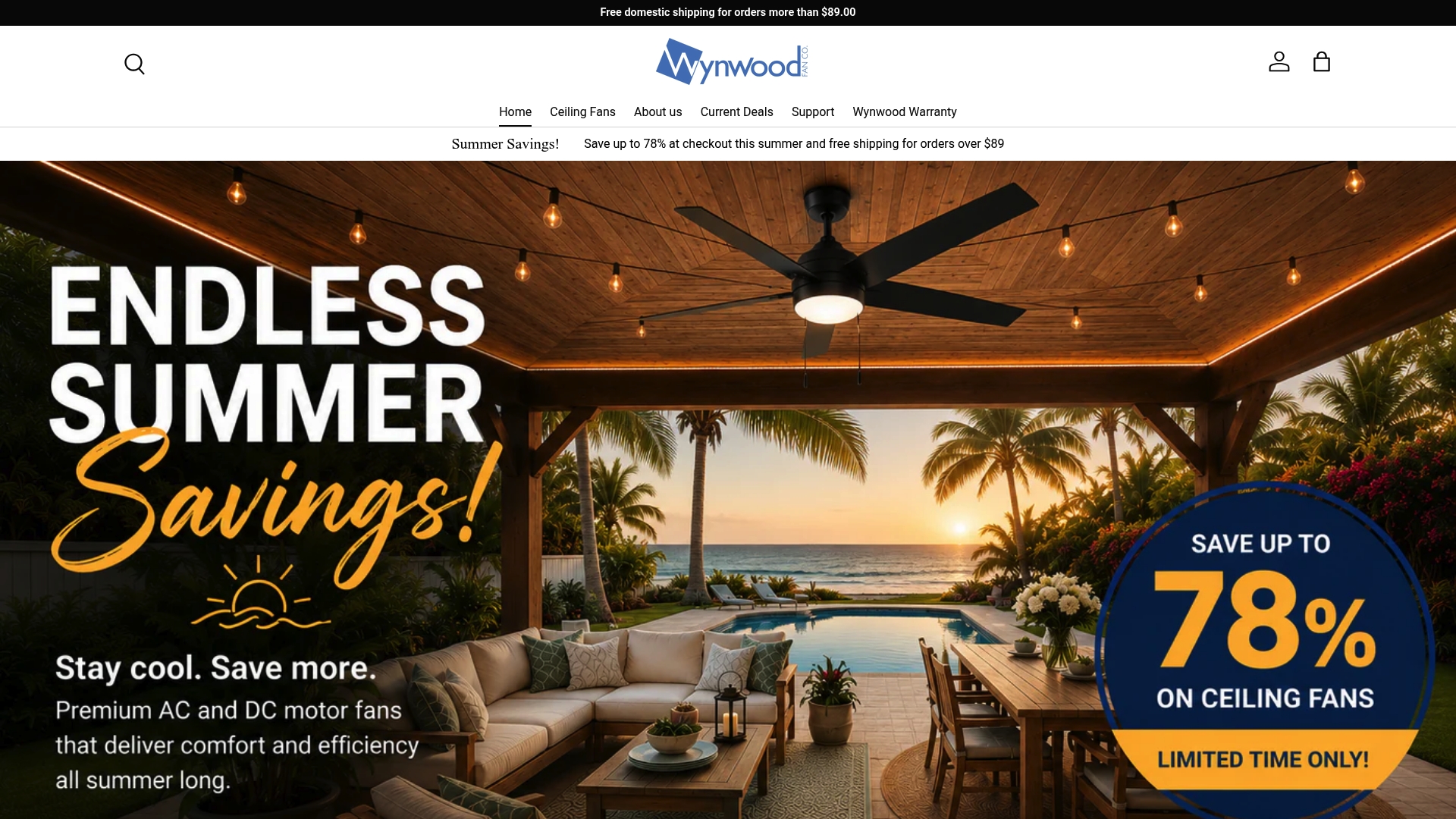
Wynwood Fans carries ceiling fan styles built specifically for living rooms, from coastal-grade models to contemporary three-blade designs with integrated LED lighting. The 52" Yonas in matte white suits coastal and modern interiors with its clean profile and quiet motor. The 52in Captiva LED in matte black delivers a contemporary three-blade look with dimmable LED and remote control included. For homeowners who want versatility across décor styles, the transitional fan collection offers reversible blades and mixed finishes that adapt as your room evolves. Every Wynwood Fans model ships with the features living rooms actually need: remote controls, integrated lighting, and motors built for quiet daily use.
FAQ
What size ceiling fan do I need for my living room?
For living rooms between 200 and 350 square feet, a 52 to 60-inch blade span is the standard recommendation. Larger rooms benefit from fans at 60 inches or above, or multiple fans positioned across distinct zones.
Are 3-blade or 5-blade ceiling fans better for living rooms?
Three-blade fans move air efficiently at lower speeds and suit modern and contemporary décors. Five-blade fans are quieter at higher speeds and work well in traditional or transitional living rooms. Motor quality matters more than blade count for overall performance.
What is a transitional ceiling fan style?
A transitional ceiling fan blends traditional shapes with contemporary finishes, often featuring reversible blades in two wood tones and mixed metal finishes. This style suits living rooms that combine classic and modern design elements.
Do ceiling fans with DC motors make a difference in living rooms?
DC motors run significantly quieter and use less energy than AC motors, which makes them the better choice for living rooms where noise is noticeable. The energy savings over daily use also add up meaningfully over a year of operation.
Can I install a ceiling fan in a living room with a low ceiling?
Yes. Flush-mount or hugger-style fans are designed for ceilings at 8 feet or below and maintain the required clearance between the blade and the floor. The Wynwood Fans 22-inch Plumier is one example built specifically for smaller low-ceiling spaces.
Recommended
- 22in Plumier Ceiling Fan – Indoor Small Room Fan with Downrod – Wynwood Fans
- 72in Torrent Outdoor Damp Rated Ceiling Fan Matte Black – Wynwood Fans
- Ceiling Fan with Remote – Wynwood Fans
- Ceiling Fan with Lights – Wynwood Fans